You can feel the difference in Rancho Santa Fe almost immediately. The roads curve instead of rush, the lots open up, and daily life feels more private, more spacious, and more intentional than in a typical suburban setting. If you are wondering what estate living here really feels like beyond the headlines and home photos, this guide will help you picture the rhythm, setting, and character of life in Rancho Santa Fe. Let’s dive in.
Rancho Santa Fe Feels Purposefully Different
Rancho Santa Fe is not best understood as a conventional suburb. At its core, it is a covenant-governed estate community with roots going back to 1928, when it was established as a country residential community focused on preserving a rural landscape.
That origin still shapes the experience today. The historic Rancho Santa Fe area covers about 10 square miles, or roughly 6,730 acres, with about 4,300 residents according to the Rancho Santa Fe Association. The result is a setting that feels established, protected, and unusually consistent in character.
The Covenant Sets the Tone
One of the first things to understand is that Rancho Santa Fe and the Covenant are not exactly the same thing. The Covenant is the historic, rules-based core, while the broader Rancho Santa Fe area also includes nearby subdivisions that may share an estate feel but often operate under their own associations or CC&Rs.
If you are looking at homes here, that distinction matters. A property in the Covenant may come with a different lifestyle pattern, access structure, and design framework than a home in the surrounding Rancho Santa Fe area.
Estate Living Means Space and Quiet
A big part of the Rancho Santa Fe lifestyle is simple: you have room to breathe. County planning documents describe the Covenant area as spanning about 6,720 acres with roughly 1,900 residential building sites, while the Association says most of the Ranch is low-density residential development with an average lot size of more than two acres.
That lower density changes how the community feels day to day. Homes are not stacked tightly together, traffic feels lighter, and open space stays part of the visual experience rather than something pushed to the edges.
The wider area is also described by county planning documents as having low noise, dark night skies, and abundant open space. If you are used to denser coastal neighborhoods, Rancho Santa Fe often feels more enclosed, more peaceful, and more removed from the pace of urban development.
The Roads Encourage a Slower Rhythm
Even the road layout contributes to the mood. The original community plan used winding roads to encourage leisurely travel and discourage high speeds and through traffic.
That means driving through Rancho Santa Fe feels different from driving through a grid-based neighborhood. The experience is less about cutting through and more about arriving, which reinforces the sense that this is a place designed for privacy and calm.
The Village Is Small but Important
Although Rancho Santa Fe is known for large estates and privacy, it is not isolated. The Village of Rancho Santa Fe serves as the social center, with shops, restaurants, other commercial businesses, and the historic Rancho Santa Fe Inn near the heart of the Covenant.
The Village is intentionally compact, and that is part of its appeal. It gives the community a gathering point without making the area feel commercialized or busy in the way a larger retail district would.
The Rancho Santa Fe Association also notes that it manages the community through a Protective Covenant and functions much like a small city, with building, planning, parks and recreation, and 24-hour security services. That helps explain why the area feels self-contained while still remaining part of San Diego County.
Daily Life Is More Destination-Oriented
Estate living here is not the same as living in a highly walkable coastal village where you step out and do everything on foot. Rancho Santa Fe has a quieter, more car-dependent daily rhythm, with homes, clubs, dining, and recreation spread out across a broader landscape.
For many buyers, that is the point. You trade constant activity and density for privacy, land, and a more relaxed pace, while still keeping access to the Village core, nearby commercial districts, and the coast.
Equestrian Culture Is Built In
In many communities, horses are a niche hobby. In Rancho Santa Fe, equestrian life is part of the physical layout and the culture itself.
The Covenant includes nearly 60 miles of private equestrian and pedestrian trails for residents and guests. These trails move through the community in a way that makes outdoor recreation feel woven into everyday life rather than added as an amenity later.
Some trail segments run around the Rancho Santa Fe Golf Course, where walkers, runners, and horseback riders share views of the course and nearby estate homes. The trails are wide enough in many areas for two horseback riders side by side, and some sections even offer ocean vistas.
There is also Osuna Ranch, a 25-acre property with walking paths, pasture, equestrian boarding, and stalls for nearly 50 horses. The Rancho Riding Club, which has served riders since 1946, offers instruction, camps, horse shows, and after-school activities.
If you love the equestrian side of Southern California living, Rancho Santa Fe offers a version of it that feels established and deeply integrated into the community fabric.
Golf and Club Life Stay Low-Key
Golf is another important part of the Rancho Santa Fe lifestyle, but it tends to feel more understated than flashy. Membership to the Rancho Santa Fe Golf Club is limited to Association property owners, and the club is described as a private 6,700-yard par-72 course.
That owner-linked access reinforces the sense that certain amenities here are tied to the community itself. Club culture in Rancho Santa Fe is generally more low-key and private than performative, which matches the area's overall tone.
The Trails & Recreation Committee also oversees sports fields and the 68-acre Arroyo Preserve, and it hosts monthly guided trail walks that end with appetizers and drinks at the golf club. That detail says a lot about the local lifestyle: outdoor, social, and polished without feeling loud.
Architecture Helps Define the Experience
What estate living feels like is not just about land size. It is also about visual continuity, and Rancho Santa Fe has a strong one.
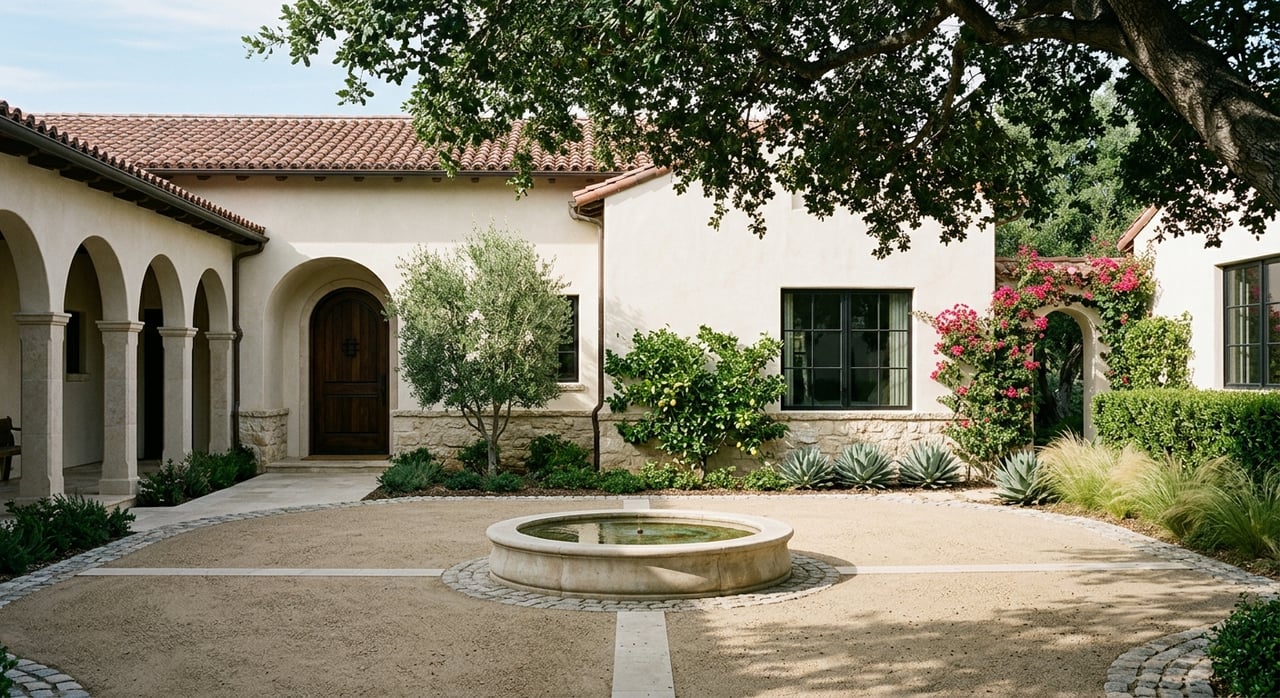
The Association says Lilian Rice’s Spanish Colonial Revival vision still appears in historic village buildings, row houses, and private residences. The Historical Society notes that her design approach helped set the tone for the simplicity of a Spanish village.
As you move through the area, that architectural influence helps create a sense of place. Instead of feeling like a patchwork of unrelated development, much of Rancho Santa Fe reads as intentional, mature, and design-conscious.
Outside the Covenant, many surrounding subdivisions are still treated as part of the broader Rancho Santa Fe area and often have similar deed restrictions, architectural review committees, and estate-style lot patterns. So even beyond the historic core, the broader identity often remains cohesive.
Dining and Gathering Feel Refined
Rancho Santa Fe is not built around strip-commercial convenience. Dining here feels more destination-oriented and centered on a few recognizable gathering places.
The Inn at Rancho Santa Fe includes a restaurant, bar, and cafe, and describes Bing’s Bar as one of the community’s central gathering places. In the Village, Paseo RSF occupies the original 1924 schoolhouse building, and Mille Fleurs has operated as a well-known Rancho Santa Fe restaurant since 1985.
That mix supports the overall lifestyle well. You have places to meet, dine, and reconnect, but the atmosphere stays more curated and intimate than high-volume.
Privacy Is One of the Biggest Draws
For many buyers, privacy is the headline feature of estate living in Rancho Santa Fe. The Association maintains a full-time private security patrol, and the area’s low-density layout naturally adds to the sense of separation and calm.
This is one reason Rancho Santa Fe continues to appeal to buyers who want discretion along with luxury. You can enjoy a community setting and shared amenities while still feeling buffered from noise, congestion, and constant visibility.
What Kind of Homes Should You Picture?
If you are imagining tract housing, Rancho Santa Fe will feel very different. The area is best known for custom estate homes on large lots, along with historic village buildings shaped by Spanish Colonial Revival design.
That means the housing experience often centers on individuality, scale, and setting. The home itself matters, of course, but so does the approach, the land, the landscaping, and how the property sits within the larger rural-residential backdrop.
Who Rancho Santa Fe Tends to Fit Best
Estate living in Rancho Santa Fe is often a strong fit if you value privacy, land, architecture, and a quieter daily pace. It can also appeal if you want a community with established design standards, outdoor recreation, and a social core that feels polished but not overbuilt.
If your ideal day includes walkability to a long list of shops, constant street activity, or a denser urban-coastal energy, the lifestyle may feel too spread out. But if your idea of luxury includes space, discretion, and a setting that feels protected over time, Rancho Santa Fe stands in a class of its own.
Choosing the right Rancho Santa Fe property also depends on nuance, especially when comparing the Covenant with nearby communities, understanding access to amenities, and evaluating how a specific estate aligns with your lifestyle goals. If you are exploring Rancho Santa Fe or preparing to sell here, working with a local advisor who understands both the market and the lived experience can make the process far more strategic. To start that conversation, connect with Stu Harvey.
FAQs
What does estate living in Rancho Santa Fe feel like day to day?
- It generally feels quiet, spacious, and private, with a slower pace, larger lots, winding roads, and a more car-dependent rhythm than a typical walkable suburb.
Is the Covenant the same thing as Rancho Santa Fe?
- No. The Covenant is the historic, rules-based core of Rancho Santa Fe, while the broader area includes nearby subdivisions that may have their own associations, restrictions, and community structures.
Are Rancho Santa Fe trails open to the public?
- No. The Covenant trail network is for residents and guests.
Can anyone join the Rancho Santa Fe Golf Club?
- No. Membership is limited to Association property owners.
What kinds of homes are common in Rancho Santa Fe?
- The area is known mostly for custom estate homes on large lots, along with architecture influenced by Spanish Colonial Revival design.
Is Rancho Santa Fe walkable like a coastal village?
- Not in the same way. The Village serves as a compact social center, but daily life in Rancho Santa Fe is generally more destination-oriented and car-dependent.
What makes Rancho Santa Fe feel more private than other communities?
- Its low-density layout, large average lot sizes, winding roads, open space, dark night skies, and full-time private security patrol all contribute to a more private, enclosed feel.
