Two buyers toured the same block on Fort Stockton Drive last spring, a week apart. Both fell for a 1920s Craftsman with a deep front porch and jacaranda shade. Both assumed the house came with a Mills Act tax contract, because it looked the part.
That gap between looking historic and being designated is the single most consequential thing to understand before writing an offer in Mission Hills, and it rarely shows up in a listing description.
Old Is a Look. Designated Is a Legal Status.
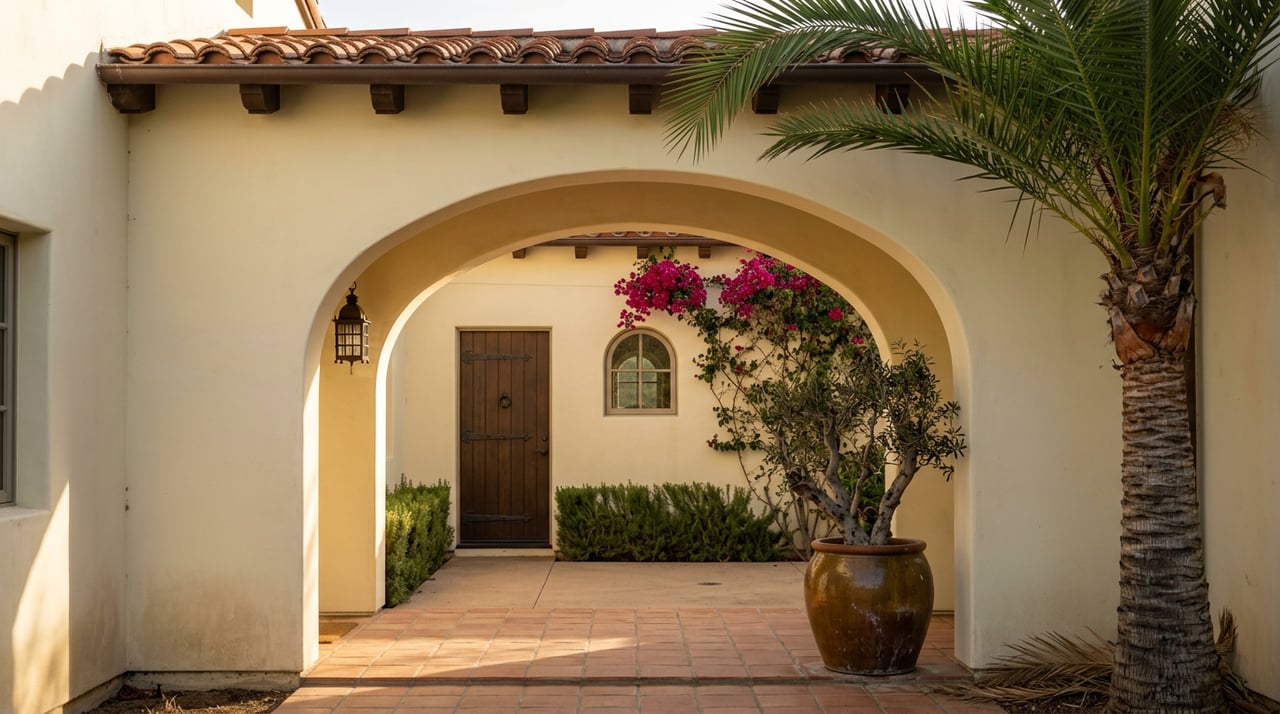
Mission Hills was laid out starting around 1907 by William and George Quayle as one of San Diego's first planned residential subdivisions, and the neighborhood's building stock still reads like a catalog of the decades that followed: Craftsman bungalows, Spanish Colonial Revival homes with red tile roofs, Mission Revival details, and later Minimal Traditional and Ranch infill from the postwar years. Walk any stretch of Sunset Boulevard or Fort Stockton Drive and the architecture alone suggests the whole neighborhood is under some kind of historic umbrella.
It isn't. A house can be a hundred years old, sit inside a historic district, and still not be individually designated or covered by a Mills Act contract. Designation is a specific action taken by the City of San Diego's Historical Resources Board, and a Mills Act contract is a separate voluntary agreement a property owner applies for after that designation exists. Age gets a home in the conversation. It does not get the home the discount.
This is also a moving target rather than a fixed inventory. Mission Hills Heritage, the resident-run preservation group that has represented the neighborhood since 1975, has worked with other local organizations over the years to nominate additional National Register historic districts, including the Marine View Historic District covering portions of south Mission Hills.
What It Actually Takes to Get There
Qualifying for a Mills Act contract in the City of San Diego is a two-step process.
First, the property has to be locally designated as historical, either as an individual landmark or as a contributing structure inside an adopted historic district. Being listed on the National Register alone does not satisfy this requirement. The City of San Diego has been explicit that a property without local designation is not eligible for the Mills Act no matter what other historic listings it holds.
Second, once designated, the owner applies for the Mills Act contract itself. The City of San Diego only accepts complete applications between January 1 and March 31 each year, and the packet has to include a photographic survey of every elevation, a ten-year schedule of proposed maintenance and restoration work, and cost estimates from qualified contractors. Miss the window and the next chance is in the following year.
None of this happens automatically at closing. A buyer who assumes a home will simply qualify because it fits the style is planning around a process that has not started.
The Contract Outlives Whoever Signed It
Here is the part that catches people mid-transaction rather than before it. A Mills Act contract is not tied to the person who applied for it. It is recorded against the property itself.
The initial term is ten years, and the agreement automatically renews each year unless either the city or the owner files notice to stop it, which effectively keeps the contract running indefinitely on a rolling basis. When the home sells, the new owner inherits both sides of the deal: the reduced property tax bill and the legal obligation to maintain the property according to the Secretary of the Interior's preservation standards.
The city puts it plainly on its own Mills Act page: if a property has been designated historical and carries a recorded contract, the benefits and responsibilities "go with the land," so new owners inherit both when the sale closes.
That means a buyer's due diligence has to include a title check for an existing Mills Act contract, not just a walkthrough of the crown molding. Skipping that step means either missing a tax benefit already baked into the house or, less pleasantly, discovering a preservation obligation nobody mentioned during showings.
What the Discount Is Actually Worth
The city's own figures put Mills Act savings anywhere from 20 percent to 70 percent off the standard property tax bill, with the exact number depending on the county assessor's rental-income-based valuation method rather than a simple percentage off market value. That range is wide enough that two Mills Act homes on the same street can carry meaningfully different tax bills.
Layer that on top of what the broader market already shows. Earlier this year, year-to-date data from the San Diego Association of Realtors for ZIP 92103, which covers Mission Hills along with Hillcrest, Bankers Hill, and University Heights, put the detached home median at $1,621,250, while attached condos in the same ZIP traded at a median of $780,000, down 8.2 percent year over year. Mission Hills itself trades above that ZIP-wide detached figure because its inventory skews so heavily toward single-family historic homes with almost no condo stock to pull the number down.
| Segment | Typical range | What it tells a buyer |
|---|---|---|
| Fixer-condition Craftsman or Spanish Revival | $1.2M to $1.6M | May or may not carry designation. Confirm before assuming eligibility. |
| Fully restored Craftsman or Spanish Revival | $2M and up | Restoration cost is often already priced in, whether or not Mills Act applies. |
| Attached condo, ZIP 92103 | Median $780,000, down 8.2% YoY | A different ownership calculation entirely. |
The price gap between a fixer and a restored home in the same style tells a buyer something about renovation cost. It tells them nothing about tax status. Those are two separate questions that happen to live in the same house.
The Renovation Clock Nobody Mentions Until You're Mid-Project
Local contractors who work Mission Hills regularly plan on four to six weeks of added review time for exterior projects on Mills Act-designated properties, on top of standard city permitting.
For a buyer weighing a fixer against a restored home, this is the piece that belongs in the offer strategy, not just the inspection period.
Why the Rules Might Not Stay the Rules
In 2025, the City of San Diego floated a package of changes to its historic preservation policies, including further restrictions on the Mills Act program itself and a shift that would let the City Council make final designation decisions instead of the Historical Resources Board. Mission Hills Heritage organized member comment against several of the proposals, arguing that politicizing the appeals process and tightening the tax incentive would undercut one of the few programs that makes owning and maintaining these older homes financially workable.
Whether or not every proposed change moves forward, the episode is a reminder that a Mills Act contract's terms are set by current city policy, not guaranteed forever at today's numbers. Anyone factoring a Mills Act discount into a ten-year ownership plan should confirm the program's current terms directly with the City of San Diego's Historical Resources office rather than relying on last year's savings figure.
A Few Straight Answers
Does every old-looking home in Mission Hills have a Mills Act contract? No. Age and style suggest a home could qualify, but designation is a separate legal step, and many period homes in the neighborhood have never gone through it.
How do I find out if a specific home already has one? A title search will show a recorded Mills Act contract if one exists. This should happen well before the close of escrow, not as an afterthought.
Can a new owner apply for Mills Act after buying an undesignated historic home? Yes, but the property has to be locally designated first, and Mills Act applications are only accepted between January 1 and March 31 each year. Plan the timeline accordingly.
If you are weighing a Mission Hills purchase or thinking about what your own historic home is actually worth once its tax status and restoration history are accounted for, that is exactly the kind of detail worth getting right before an offer goes in, not after. Stu Harvey works Mission Hills and San Diego's coastal neighborhoods with that level of detail as the baseline, not the upsell. Book a consultation and get a straight read on what a specific address actually carries.
This article is general information, not legal, tax or financial advice. Consult a qualified professional about your situation.
